
Can dogs eat seaweed?
Only a little
Only a little. Plain nori sheets with no added salt or garlic are fine; wild beach seaweed is a risk.
On this page
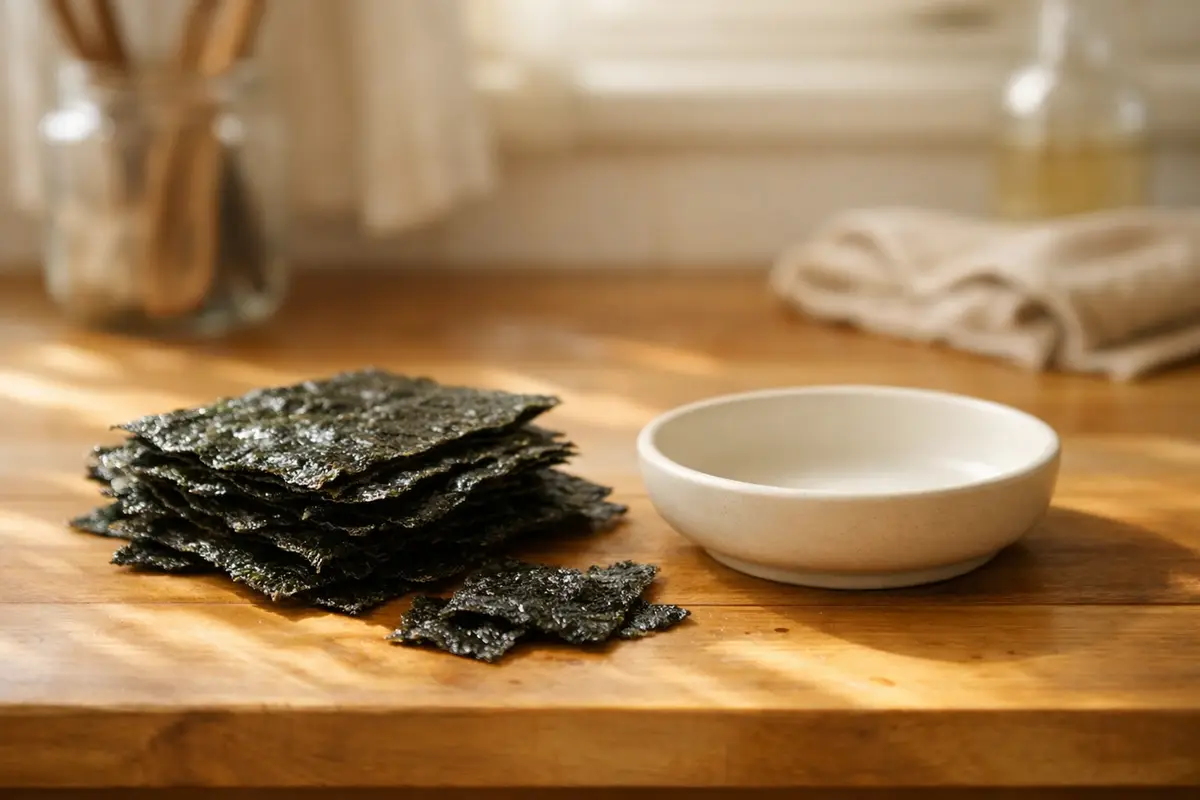
Prepackaged seaweed sheets can be shared with a dog in small amounts, as long as the label shows no salt, garlic or other seasonings. AKC's chief veterinarian describes seaweed as nutritious, but too much can upset the stomach and the iodine can affect the thyroid. The bigger worry is seaweed picked up on the beach, which can carry salt, parasites and cause a blockage.
What is good about it
- Dr. Jerry Klein of AKC says seaweed contains protein, iron, iodine, magnesium and omega-3s.
- AKC notes that iron supports red blood cell health and magnesium supports immune and nervous systems.
Risks to know
- Added salt or garlic on seasoned sheets makes them a poor choice; soy sauce is high in salt, which can be dangerous in concentrated amounts.
- Too much seaweed can upset the stomach, and too much iodine can have an effect on the thyroid.
- Wild seaweed can hold excessive salt and risks salt toxicosis, and long strands can lodge in the intestines or carry hidden animals or parasites.
- Dry wild seaweed can swell in the stomach, which AKC links to vomiting, diarrhea, weakness and signs of a bowel obstruction.
How to serve seaweed to a dog
- Choose plain, unseasoned nori and read the ingredients list first.
- Offer only small amounts.
- Skip sushi made with raw fish, which AKC says can make a dog sick.
- Check with your vet before adding seaweed or kelp supplements.
How much: AKC says to feed seaweed only in small amounts and gives no exact figure.
If your dog ate seaweed
If your dog ate wild seaweed on the beach, AKC says to consult a veterinarian right away. Note what was eaten, about how much, and when. Watch for vomiting, diarrhea, weakness and lethargy, and call your vet or an emergency vet if they appear. For a few plain nori sheets, mention it to your vet if you are unsure.
Signs the sources say to watch for:
- vomiting
- diarrhea
- weakness
- lethargy
- signs of bowel obstruction
Phone numbers: your own vet or the nearest emergency vet first, or ASPCA Animal Poison Control at (888) 426-4435 and Pet Poison Helpline at (855) 764-7661, both open around the clock. Pet Poison Helpline says an incident fee applies to its calls.
In the sources' words
“dogs can eat processed sheets of seaweed or nori, as long as it does not contain added salt or garlic”
“Only feed your dog seaweed if it’s plain, unseasoned, and in small amounts.”
“If your dog does consume seaweed on the beach, consult a veterinarian right away.”
Questions
Can dogs eat kelp?
AKC says kelp and seaweed are different species, though the words are often used interchangeably. Kelp gets the same advice: plain, and only a limited amount.
Can dogs eat seaweed snacks with seasoning?
AKC advises against them. Its vet says dogs can eat processed nori sheets only when they contain no added salt or garlic, so seasoned snacks do not fit that advice.
How this page was checked
Everything above comes from the page listed under Sources, which we saved on November 11, 2026 and keep on file. The wording is ours; the quotes are copied exactly, and a test checks each one against the saved page. Nothing here is a dose or a home remedy, and no amount is given as safe for every dog: size, age and health change the answer, so a dog with a medical condition or a special diet should get a vet's go-ahead first.
A food missing from our A to Z list has not been cleared as safe. For the full lists behind these pages, see toxic foods for dogs and toxic plants for dogs.