
Why Does My Cat Keep Throwing Up? Hairballs, Warning Signs and When to Call
Warning signs first (blood, weakness, unproductive retching, not eating, a possible poison or string), then what came up, then how often. A hairball every week or two in a well cat is the calmest result; more than weekly vomiting means booking the vet.
On this page
Why does my cat keep throwing up? When to call the vet
Up to three short questions: warning signs first, then what came up, then how often. Every path ends with who to call and how soon.
Do you see any of these?
Cornell's Feline Health Center says many cats vomit now and then, but frequent vomiting, or vomiting with lethargy, weakness, less appetite, blood, more thirst, a change in peeing or diarrhea, needs a vet.
Blood in the vomit, or weakness, lethargy or a painful belly
Act now
Vomiting with blood or signs of illness
Merck says vomiting with blood, abdominal pain, depression, dehydration, weakness, fever or weight loss needs a detailed examination, and that some causes of severe vomiting are life-threatening.
What to do
- Call your vet now. If the practice is closed, call an emergency vet.
- Tell them how often your cat vomited, what came up (hair, food, liquid), and anything it could have eaten, chewed or licked.
Heaving again and again with nothing coming up, or breathing looks hard
Act now
Repeated retching, or hard breathing
Cornell says a cat with repeated unproductive retching should be seen without delay, and that what looks like hairball hacking can be a breathing problem such as asthma, which may need emergency treatment.
What to do
- Call your vet now. If the practice is closed, call an emergency vet.
- Tell them whether your cat is coughing or breathing with effort, as well as retching.
- Tell them how often your cat vomited, what came up (hair, food, liquid), and anything it could have eaten, chewed or licked.
Not eating for more than a day or two
Act now
Vomiting and not eating
Cornell says a cat that is lethargic, refuses food for more than a day or two, or keeps retching or vomiting should be examined without delay. It says a hairball that lodges in the gut is uncommon, but can be fatal without surgery.
What to do
- Call your vet now. If the practice is closed, call an emergency vet.
- Tell them how often your cat vomited, what came up (hair, food, liquid), and anything it could have eaten, chewed or licked.
My cat may have eaten string, a plant, a medicine, antifreeze or a human food
Act now
Vomiting after string, a plant, a medicine or a toxic food
Cornell lists poisonous plants, human medicines, string or yarn, antifreeze and foods such as chocolate and onions among common causes of vomiting in cats.
What to do
- Call your vet, an emergency vet, ASPCA Animal Poison Control at (888) 426-4435, or Pet Poison Helpline at (855) 764-7661 now.
- Have the package, plant or label ready, and say how much may be missing.
- Tell them how often your cat vomited, what came up (hair, food, liquid), and anything it could have eaten, chewed or licked.
None of these
What came up?
A hairball: a damp, sausage-shaped wad of hair
How often does your cat bring up hairballs?
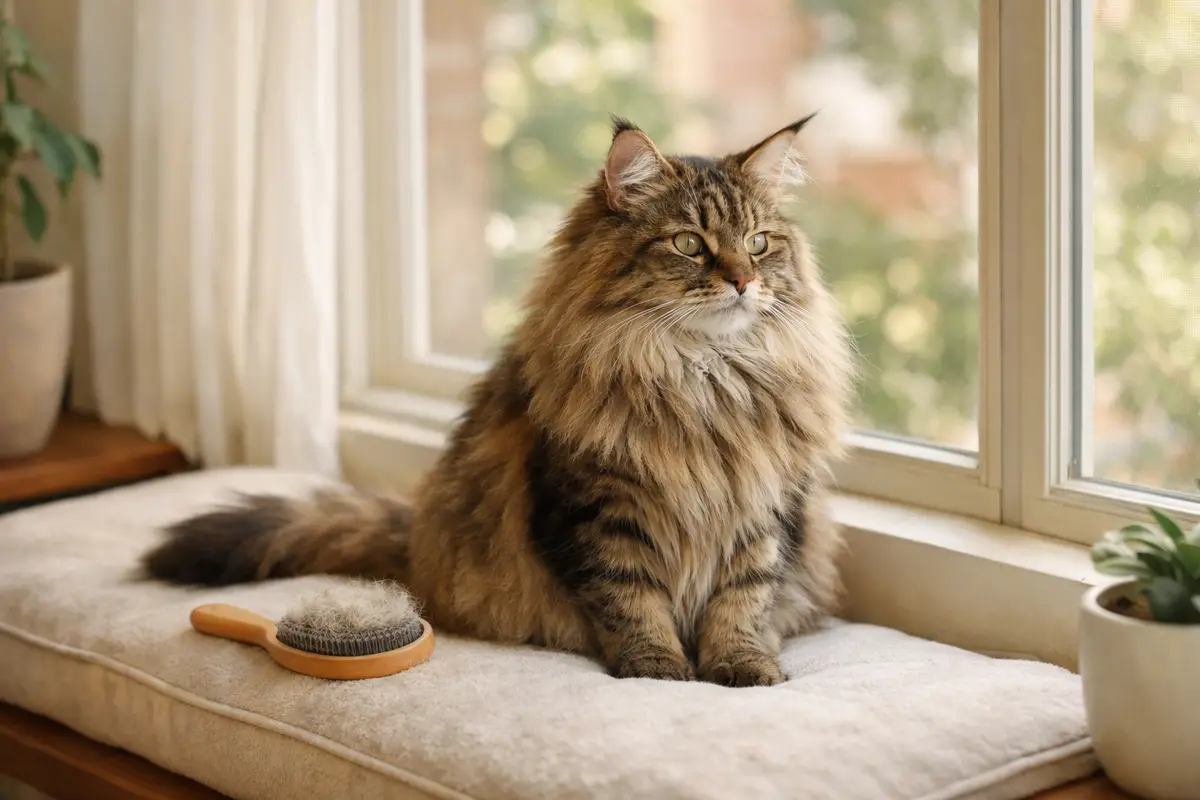
Cornell says it is not uncommon for a cat to bring up a hairball every week or two. Long-haired cats and heavy groomers get more of them, especially in shedding season.
About once every week or two, and my cat is otherwise well
Keep an eye on it
A hairball every week or two, otherwise well
Cornell says bringing up a hairball once every week or two is not uncommon and nothing to worry about on its own. It suggests daily brushing and combing to cut down on swallowed hair.
What to do
- Mention it to your vet at the next visit, or call the office if you want advice sooner.
- Do not give a laxative or a special hairball diet unless your vet says to. Cornell says the same.
- Call at once if your cat stops eating, keeps retching, or seems unwell.
More often than that, or with retching that brings nothing up
Deal with it soon
Hairballs more often, or unproductive retching
Merck says to see your vet when a cat has frequent hairballs or keeps vomiting, because something more serious than a hairball could be to blame. A hairball that stays in the stomach can harden and block the gut.
What to do
- Call your vet today and ask to be seen.
- Tell them how often your cat vomited, what came up (hair, food, liquid), and anything it could have eaten, chewed or licked.
Food or liquid
How often is it happening?
More than once or twice in a day
Deal with it soon
Vomiting more than once or twice in a day
Merck says vomiting more often than once or twice daily needs a detailed examination by your vet.
What to do
- Call your vet today and ask to be seen.
- Tell them how often your cat vomited, what came up (hair, food, liquid), and anything it could have eaten, chewed or licked.
- Call again at once if you see blood, weakness or any sign from the first question.
More than once a week, on and off
Deal with it soon
Vomiting more than once a week
Cornell says a cat that vomits more often than once a week should be seen by a vet promptly. Causes it lists range from hairballs and parasites to bowel disease, diabetes, kidney disease and an overactive thyroid.
What to do
- Call your vet and book a visit soon.
- Tell them how often your cat vomited, what came up (hair, food, liquid), and anything it could have eaten, chewed or licked.
- Keep a short note of each time: the date, what came up, and how long after eating.
Along with diarrhea, more thirst, or peeing more or less
Deal with it soon
Vomiting with diarrhea, thirst or peeing changes
Cornell names increased thirst, more or less urination, and diarrhea at the same time among the signs that mean a vomiting cat should be seen promptly.
What to do
- Call your vet today and ask to be seen.
- Tell them how often your cat vomited, what came up (hair, food, liquid), and anything it could have eaten, chewed or licked.
- Note how much your cat is drinking and how often the litter box needs cleaning.
Once, and my cat seems itself
Keep an eye on it
One bout, and otherwise well
Merck says short-term or occasional vomiting is generally not linked to other problems, and Cornell says even healthy cats vomit now and then. The vet's office is the place to ask about food and water.
What to do
- Call your vet's office, describe what happened, and ask what they want you to do next.
- Call again at once if it happens again today, or if your cat stops eating or seems unwell.
I am not sure
How often is it happening?
More than once or twice in a day
Deal with it soon
Vomiting more than once or twice in a day
Merck says vomiting more often than once or twice daily needs a detailed examination by your vet.
What to do
- Call your vet today and ask to be seen.
- Tell them how often your cat vomited, what came up (hair, food, liquid), and anything it could have eaten, chewed or licked.
- Call again at once if you see blood, weakness or any sign from the first question.
More than once a week, on and off
Deal with it soon
Vomiting more than once a week
Cornell says a cat that vomits more often than once a week should be seen by a vet promptly. Causes it lists range from hairballs and parasites to bowel disease, diabetes, kidney disease and an overactive thyroid.
What to do
- Call your vet and book a visit soon.
- Tell them how often your cat vomited, what came up (hair, food, liquid), and anything it could have eaten, chewed or licked.
- Keep a short note of each time: the date, what came up, and how long after eating.
Along with diarrhea, more thirst, or peeing more or less
Deal with it soon
Vomiting with diarrhea, thirst or peeing changes
Cornell names increased thirst, more or less urination, and diarrhea at the same time among the signs that mean a vomiting cat should be seen promptly.
What to do
- Call your vet today and ask to be seen.
- Tell them how often your cat vomited, what came up (hair, food, liquid), and anything it could have eaten, chewed or licked.
- Note how much your cat is drinking and how often the litter box needs cleaning.
Once, and my cat seems itself
Keep an eye on it
One bout, and otherwise well
Merck says short-term or occasional vomiting is generally not linked to other problems, and Cornell says even healthy cats vomit now and then. The vet's office is the place to ask about food and water.
What to do
- Call your vet's office, describe what happened, and ask what they want you to do next.
- Call again at once if it happens again today, or if your cat stops eating or seems unwell.
Some vomiting is normal for cats. Frequent vomiting is not.
Cornell's Feline Health Center puts it plainly: even a healthy cat throws up now and then, and a hairball every week or two is not unusual. The same page draws a clear line. A cat that vomits more often than once a week, or that vomits along with lethargy, weakness, a poorer appetite, blood, more thirst, peeing more or less, or diarrhea, should see a vet promptly. Merck's owner manual adds a stricter line for the short term: vomiting more often than once or twice daily needs a detailed examination.
The warning signs the first question looks for
Blood, weakness or a sore belly lead straight to a call now. So does a cat that keeps heaving with nothing coming up, because Cornell warns that what looks like hairball hacking can be a breathing problem such as asthma, which may need emergency care. A cat that has not eaten for more than a day or two belongs here too. Cornell says a hairball that lodges in the intestine is uncommon, but can be fatal without surgery.
The last warning is about what your cat might have swallowed. Cornell lists poisonous plants, human medicines, string or yarn, antifreeze and foods such as chocolate and onions among common causes.
Hairball or something else?
A hairball that has been brought up is usually not round. Cornell describes it as a damp, cigar-shaped wad, roughly the colour of the coat, often darkened by food and bile. If that is what you found, the tool asks how often it happens. Long-haired cats and heavy groomers get more, especially when shedding, and Cornell recommends daily brushing and combing. Merck says frequent hairballs are a reason to see the vet, since something more serious can be behind them.
Worked example: a long-haired cat, twice this week
Your Maine Coon has brought up food twice this week, a few hours after eating, and once a hairball last week. She is eating and playing normally. In the first question, nothing applies. In the second, pick "Food or liquid". In the third, "More than once a week, on and off". The result is to book a vet visit soon. Before you call, write down each date, what came up, and how long after a meal it happened.
What this page will not do
It suggests no laxatives, hairball pastes or diet changes. Cornell advises never giving a laxative without a vet's approval. For foods and plants that worry you, see can cats eat it? and toxic plants for cats.
Sources
- Cornell Feline Health Center, Vomiting vet.cornell.edu
- Cornell Feline Health Center, The danger of hairballs vet.cornell.edu
- Merck Veterinary Manual, Vomiting in cats (pet owner version, updated Sept 2024) merckvetmanual.com
- Pet Poison Helpline, Contact petpoisonhelpline.com